Solids and mineralogy
Mineral type, particle size and nature, solids percentage, and feed variability.
Mineral processing and process water
Reagent performance depends on the process where it is used: solids characteristics, water, dosage, mixing, hydraulics, equipment, and operating conditions. TREGA supplies chemical solutions and technical guidance for solid-liquid separation, clarification, and water management in mining operations.
Technical criteria
In thickening, clarification, filtration, and dewatering, solid-liquid separation depends on slurry characteristics, particle size and nature, solids concentration, mixing, dosage, hydraulics, and equipment.
The quality of recovered or recirculated water can affect the stability of other processes. Clarity, suspended solids, scaling, and water chemistry should be assessed according to the circuit and operating objective.
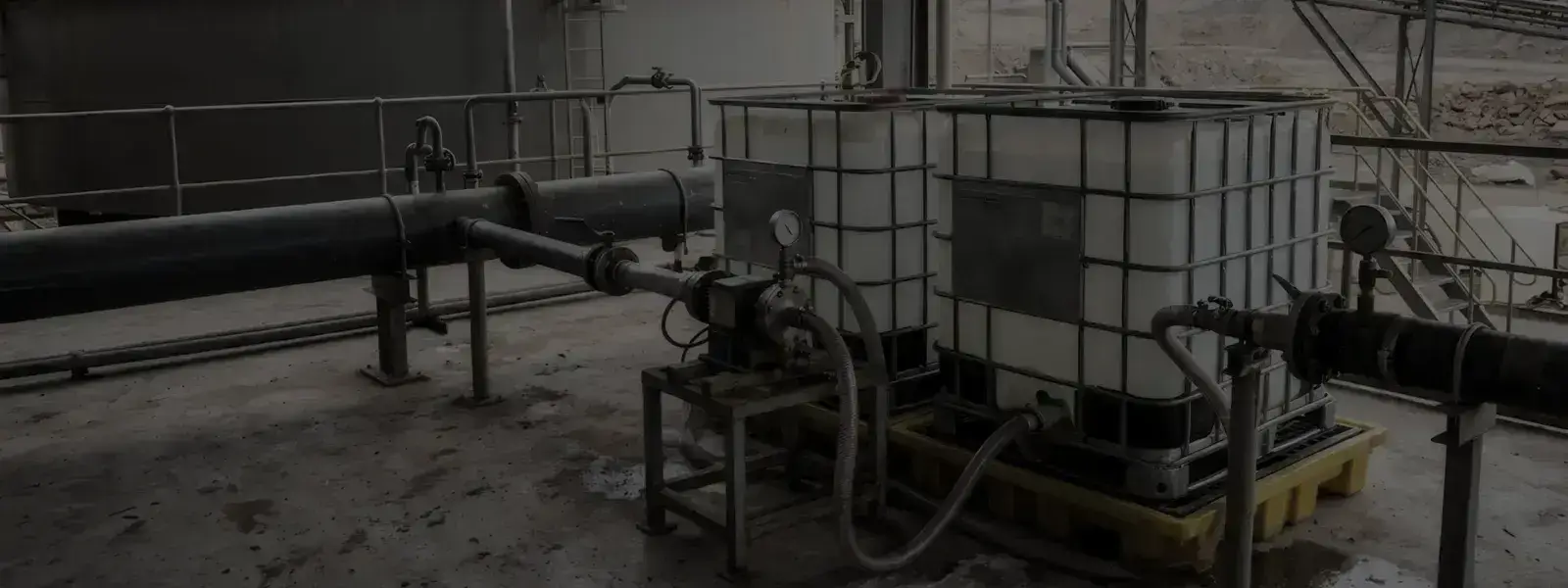
Critical variables
Circuit response can change even when the reagent remains the same. The review should consider the complete process and the information available.
Mineral type, particle size and nature, solids percentage, and feed variability.
Water quality and origin, pH, suspended solids, recirculation, and conditions that can affect other processes.
Flow, mixing, shear, residence time, and hydraulic behavior at the treatment point.
Product, dosage, preparation, addition point, feed conditions, and available equipment.
Two related contexts
The objective is not to transfer the same formulation from one point to another, but to understand which separation or water-management mechanism needs support.
Mineral processing
Process water
Chemical solutions
This page is not an exhaustive product catalog. Selection should start from the process objective and observed operating conditions.
Help form larger aggregates that can settle or separate more readily when the process condition requires it.
Can help destabilize fine particles and colloids as part of a separation approach defined for the treated stream.
Filter aids, antiscalants, defoamers, and other families only when the application and technical scope have been confirmed.
Review of process information, available parameters, and observed behavior to guide selection or adjustment.
How TREGA participates
Locate the deviation point and the circuit’s technical objective.
Analyze available information on solids, water, dosage, mixing, and operating conditions.
Define product and parameters compatible with the identified problem.
Implement changes in a controlled way when the project scope allows it.
Compare subsequent behavior and determine whether the target variable responded.
Provide guidance on preparation, handling, and application when appropriate for the project.
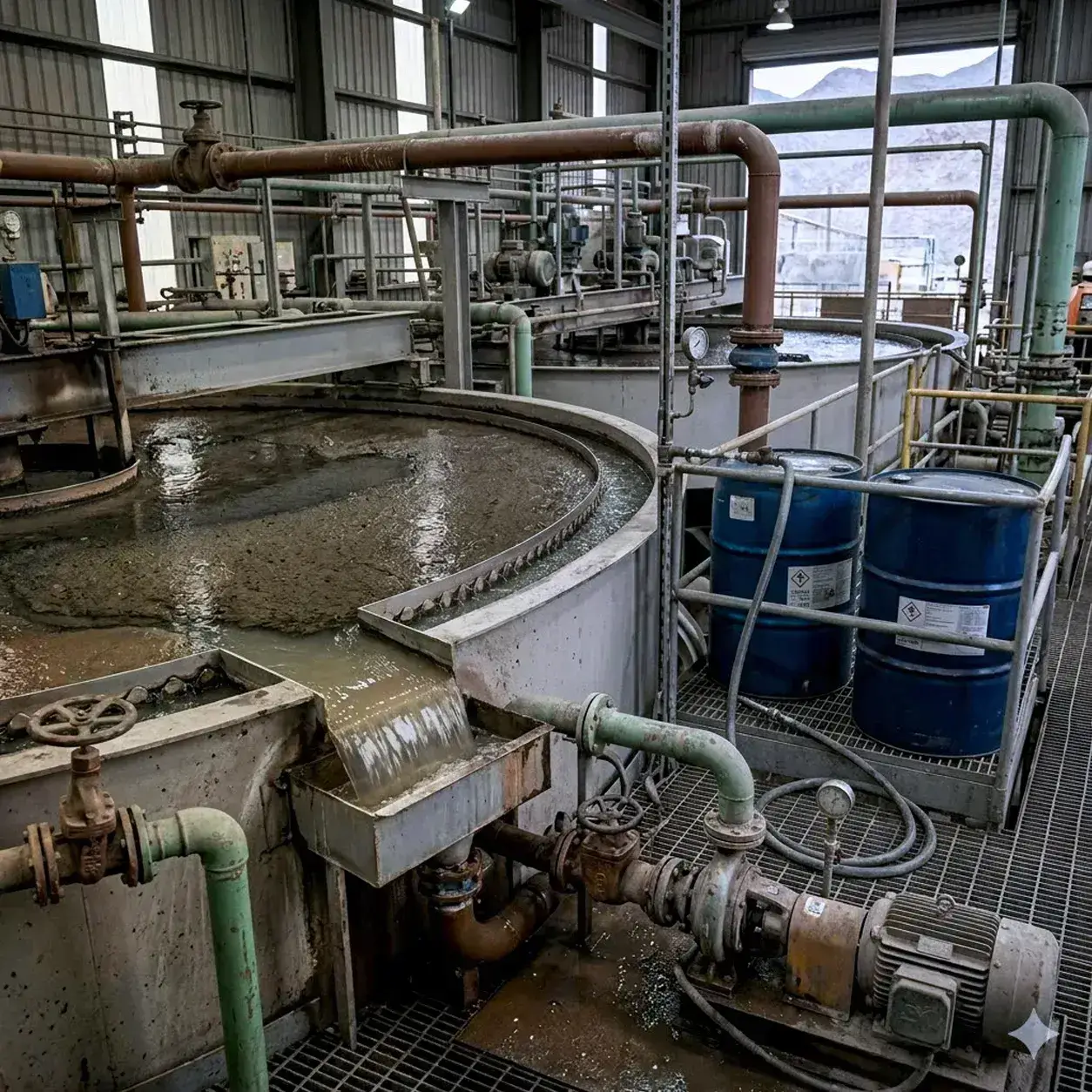
Performance diagnosis
System response can change because of variations in solids, mineralogy, water, flow, pH, mixing, shear, residence time, equipment, or feed conditions. Before changing a chemical program, it is useful to identify which variable changed and which part of the process is limiting the result.
Review a process conditionFrequently asked questions
Direct answers about the scope of TREGA’s technical service line.
Solid-liquid separation, clarification, thickening, filtration, dewatering, and water management or recovery when the application and scope are defined.
Flocculants and coagulants are TREGA’s declared priority lines. Other chemical families may be incorporated as complementary solutions according to the application.
No. Results can change with solids, mineralogy, water, flow, pH, mixing, shear, residence time, equipment, and feed conditions.
Process type, treated stream, solids, water, current product and dosage, flow, pH, observed performance, and recent circuit changes.
Mineral processing and process water
Share the process point, observed condition, and available variables. The initial review should distinguish whether the limitation is in the reagent, dosage, or another circuit condition.