Road surface and fines
Road-surface condition and fines involved in dust generation.
Dust suppression for mining
TREGA combines dust suppressants, technical assessment, and application support for mine haul roads and other dust sources. The solution is defined according to road surface, fines, traffic, climate, water, application, and maintenance.
Technical criteria
In dust suppression, the same solution can perform differently when road surface, fines, traffic weight, volume and speed, water, climate, application, or maintenance changes.
That is why selection should not be based only on the product name or a fixed application frequency. TREGA starts from actual road and operating conditions to define a solution and application approach that makes technical sense.
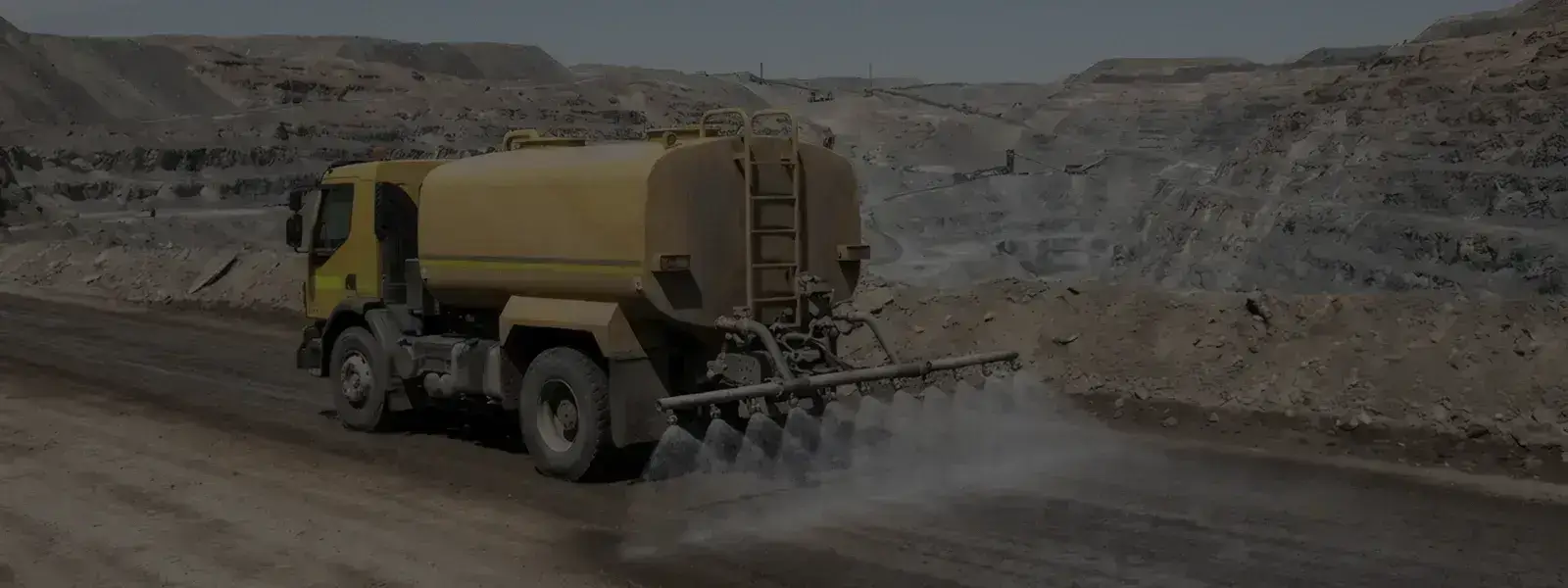
Critical variables
The technical assessment focuses on variables that can affect dust generation and how long the treatment performs on the road.
Road-surface condition and fines involved in dust generation.
Water availability and climate conditions that can change treatment behavior and application frequency.
Traffic weight, volume, and speed on the haul road during operation.
Application method and frequency, together with the maintenance required to sustain performance.
Application conditions
TREGA reviews the dust source and operating conditions before defining product, application, and follow-up. The same treatment should not be assumed to perform equally under different conditions.
Mine haul roads
Other dust sources
What TREGA integrates
The solution is built around the dust source and operating conditions, without separating the product from how it is applied and maintained.
Technical selection according to road surface, traffic, water, climate, and operating conditions.
Review of road surface, fines, traffic, and the variables that affect dust generation.
Definition of application and frequency according to observed field conditions.
Application support and follow-up to review actual field performance and identify required adjustments.
How we work
We identify road surface, fines, traffic, water, climate, and operating conditions that can affect the result.
We select the solution and application approach based on the variables that actually determine dust-control performance.
Technical support makes it possible to compare the recommendation with observed performance after application.
Follow-up helps identify adjustments when traffic, climate, road surface, or maintenance changes.
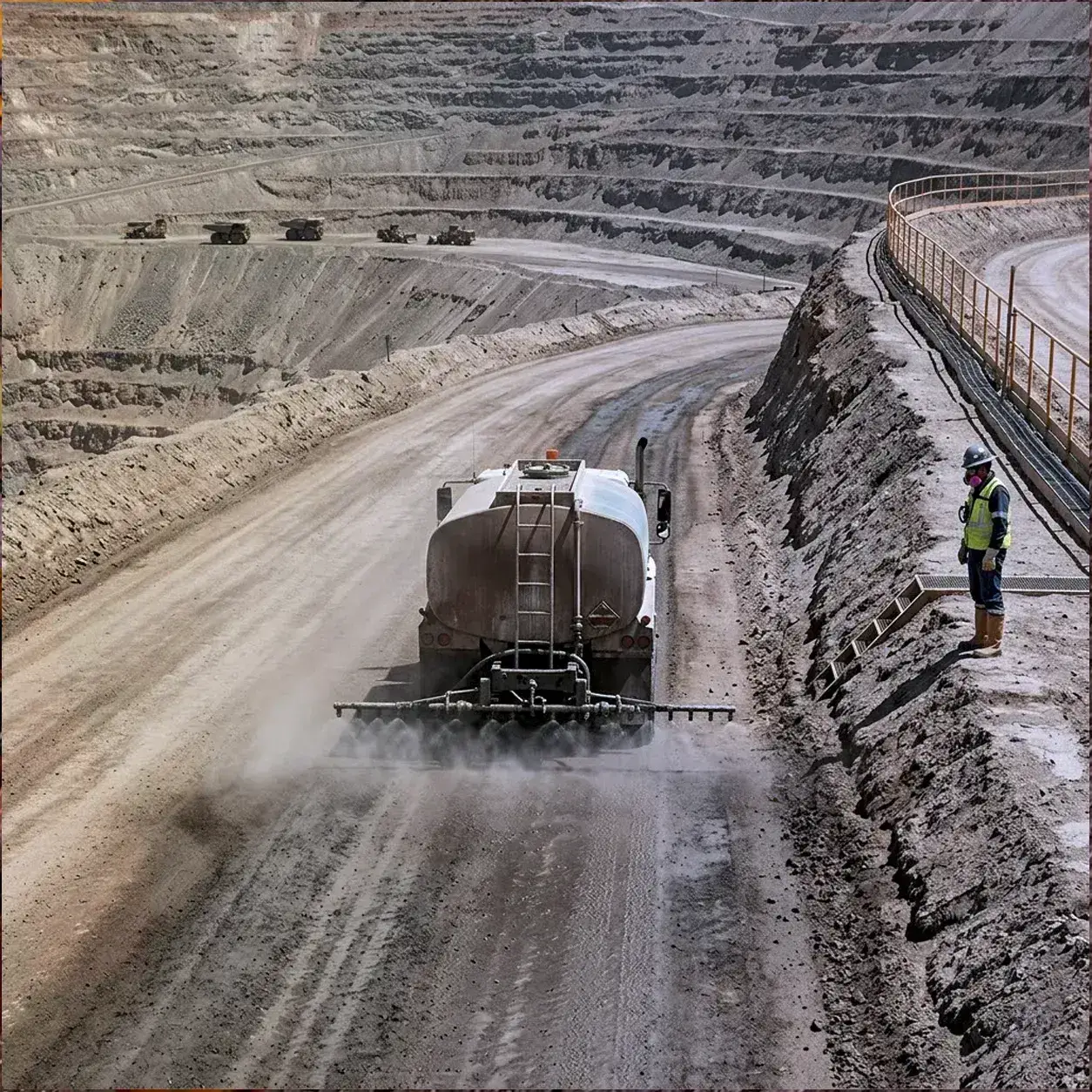
Observable performance
An increase in dust can indicate changes in road surface, traffic, climate, water, application, or maintenance. The objective is to identify the variable before compensating only with more product or more frequent applications.
Review a field conditionFrequently asked questions
Direct answers about the scope of TREGA’s technical shotcrete line.
Yes. TREGA works with dust-suppression solutions for mine haul roads and other dust sources within mining operations.
Road surface and fines, traffic weight, volume and speed, water, climate, application, and maintenance.
No. Performance can also change when road surface, traffic, water, climate, application frequency, or maintenance changes.
Yes. The service line combines supply with technical assessment, application support, and follow-up according to operating conditions.
Dust suppression
Share the road-surface condition, traffic, available water, climate, application method, and observed behavior with TREGA. From that information, we can guide the technical review.